It’s time to help contribute for biggest aquarium gallery online

SUBMIT HEREVIEW GALLERY

Atractosteus spatula (Alligator Gar)

Overview

The Alligator Gar (Atractosteus spatula) is one of the largest freshwater fishes in North America, often referred to as a living fossil. While the juvenile specimen pictured is only around 15 cm, these prehistoric giants can grow to staggering lengths. Due to their extreme adult size, they are strictly recommended for expert aquarists with access to massive custom enclosures or heated indoor ponds.

Image of aligatorhecht atractosteus spatula 15cm raritaet

Distribution and Habitat

Native to the lower Mississippi River Valley and Gulf Coast states of the US, extending down into Veracruz, Mexico. They inhabit slow-moving rivers, bayous, reservoirs, and estuaries, showing a remarkable tolerance for brackish water. They often lurk among submerged logs and dense vegetation.

Description of Alligator Gar

Body shape:

They possess a highly elongated, torpedo-like body designed for sudden bursts of speed. Their bodies are covered in interlocking, diamond-shaped ganoid scales that act like armor.

Color:

Juveniles and adults typically display a brownish or olive upper body fading to a lighter, whitish belly. Juveniles, as seen in the images, have distinct dark mottling and spots along their sides and fins to help them camouflage.

Barbels:

They do not have true barbels.

Snout:

The most distinguishing feature is their broad, alligator-like snout filled with two rows of sharp, conical teeth in the upper jaw, perfectly adapted for grasping prey.

Image of aligatorhecht atractosteus spatula 15cm raritaet

Eyes:

Their eyes are relatively small compared to their massive heads, positioned to look outward and slightly upward to spot prey near the surface.

Fins:

The dorsal and anal fins are positioned far back on the body, near the tail, which provides the explosive thrust needed for ambush hunting.

The Tail:

The caudal fin is rounded and heterocercal (the spine extends slightly into the upper lobe), aiding in powerful, sudden acceleration.

Temper

While generally sluggish and peaceful towards fish they cannot swallow, they are highly predatory. Any tank mate that can fit into their expansive mouths will be viewed as food. Due to this predatory nature, they are considered aggressive.

Sociality

They are solitary ambush predators by nature but can be kept with other similarly sized, large monster fish provided the enclosure is large enough to prevent territorial disputes.

Activity

Alligator Gars are typically lethargic, often seen hovering motionless near the surface or resting at the bottom. They conserve their energy for lightning-fast strikes when prey comes within range.

Image of aligatorhecht atractosteus spatula 15cm raritaet

Keeping and Caring for Alligator Gar

Tank size:

A 15 cm juvenile can temporarily be housed in a 200-liter aquarium, but they grow exceptionally fast. An adult will require a custom indoor pond or an aquarium of at least 4,000 to 10,000 liters. This is not a fish for a standard home aquarium.

Water Parameters:

They are incredibly hardy and can tolerate a wide range of water conditions, including low oxygen environments thanks to their modified swim bladder that allows them to gulp atmospheric air.

Temperature

15-27°C. They are adaptable to both temperate and tropical temperatures.

pH

6.0-8.0. They are not overly fussy about pH, provided extremes are avoided.

Hardness

5-20 dGH. A moderate hardness is generally preferred.

Ammonia, Nitrite, Nitrate

Ammonia and Nitrite must be 0 ppm. Nitrates should be kept below 40 ppm. Due to their heavy diet, massive filtration systems are mandatory to handle the bioload.

Lighting

Moderate lighting is sufficient. They do not require intense lighting, and a dimly lit tank can help reduce stress in juveniles.

Water flow

Low to moderate flow. They prefer sluggish waters and do not need strong currents.

Decorations and Plants

For juveniles, providing hiding spots with driftwood and robust plants is beneficial. For adults, the tank should be mostly bare or have very large, extremely heavy decorations, as their sheer size and power will easily destroy or move standard aquarium decor.

Diet

Carnivorous. In the wild, they eat fish, crustaceans, and occasionally waterfowl or small mammals. In captivity, juveniles can be fed meaty foods like chopped fish, shrimp, earthworms, and eventually trained onto high-quality carnivore pellets. Adults require large whole fish, shrimp, and other substantial meaty items.

Some Feeding Tips

Avoid feeding mammalian or avian meats regularly, as the lipids are hard for them to digest. Ensure a varied diet to prevent nutritional deficiencies. Be cautious during feeding time, as their strike is incredibly fast and powerful.

Breeding

Breeding in home aquaria is practically impossible due to the immense size of the adults and the specific seasonal flooding triggers required for spawning. They spawn in flooded plains in the spring, laying toxic green eggs that adhere to vegetation.

Conclusion

The Alligator Gar is a spectacular, awe-inspiring predator that offers a glimpse into prehistoric times. However, their monumental adult size and specialized housing requirements mean they should only be kept by the most dedicated and well-equipped expert aquarists. For those who can accommodate them, they are a truly magnificent aquatic specimen.

Fish info

Care level: Expert Only
Temperament: Aggressive
Adult size: 150-300 cm
Life expectancy: 50-70 years
Fish type: Gar
Temperature : 15-27°C
pH: 6.0-8.0
Color Form: Black, Brown, White
Leave your comments
Lastest on Fishs
  • Megalomphodus roseus (Golden Phantom Tetra)

    Easy
    Gar
    The Golden Phantom Tetra (Megalomphodus roseus), native to the shaded forest streams of South America, is a captivating and peaceful schooling fish. Known for its distinct black shoulder spot and subtle golden-yellow hues, this active tetra adds a lively, shimmering dynamic to any planted community aquarium.
  • Gymnocorymbus ternetzi (Golden Mourning Tetra)

    Easy
    Gar
    The Golden Mourning Tetra, a captivating color morph of the popular Black Skirt Tetra, originates from South America. Known for its shimmering, translucent golden hue and hardy nature, this peaceful schooling fish is incredibly popular among both beginner and experienced aquarists seeking an active and resilient community tank addition.
  • Epalzeorhynchos frenatum (Albino Rainbow Shark)

    Moderate
    Gar
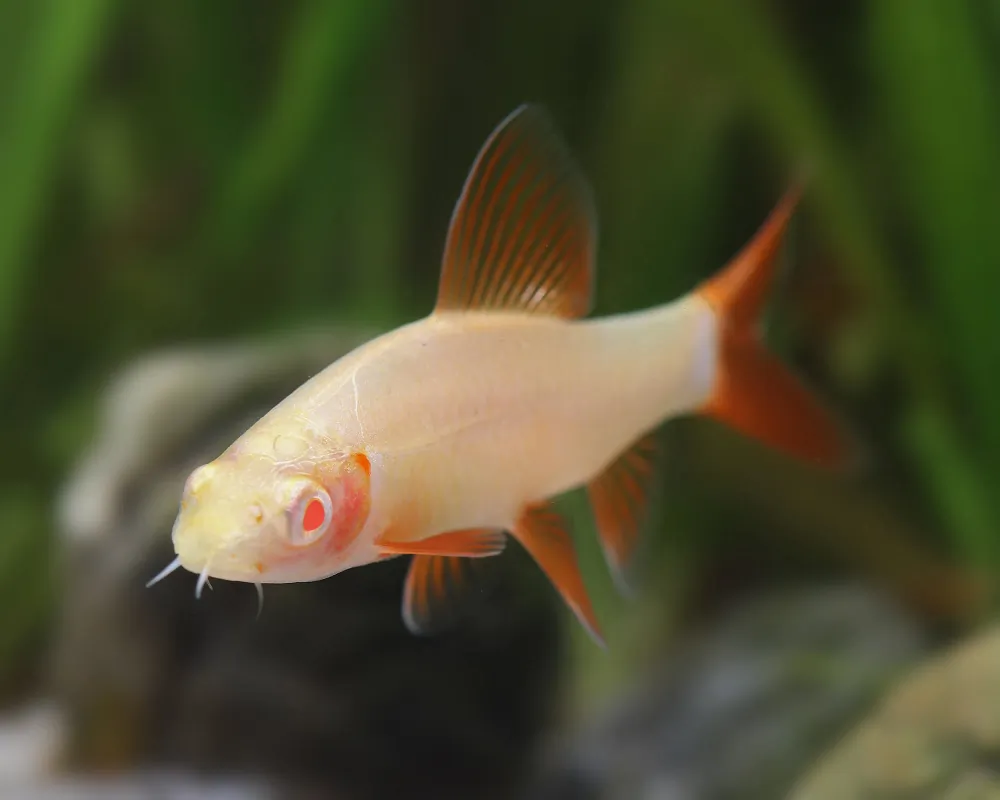
    The Albino Rainbow Shark is a striking freshwater fish renowned for its pale, creamy body and vivid orange-red fins. Originating from Southeast Asia, this semi-aggressive bottom-dweller brings dynamic energy to a well-sized community aquarium. Its shark-like appearance and active scavenging behavior make it a long-standing favorite among aquarists.
  • Nematobrycon palmeri (Golden Emperor Tetra)

    Easy
    Gar
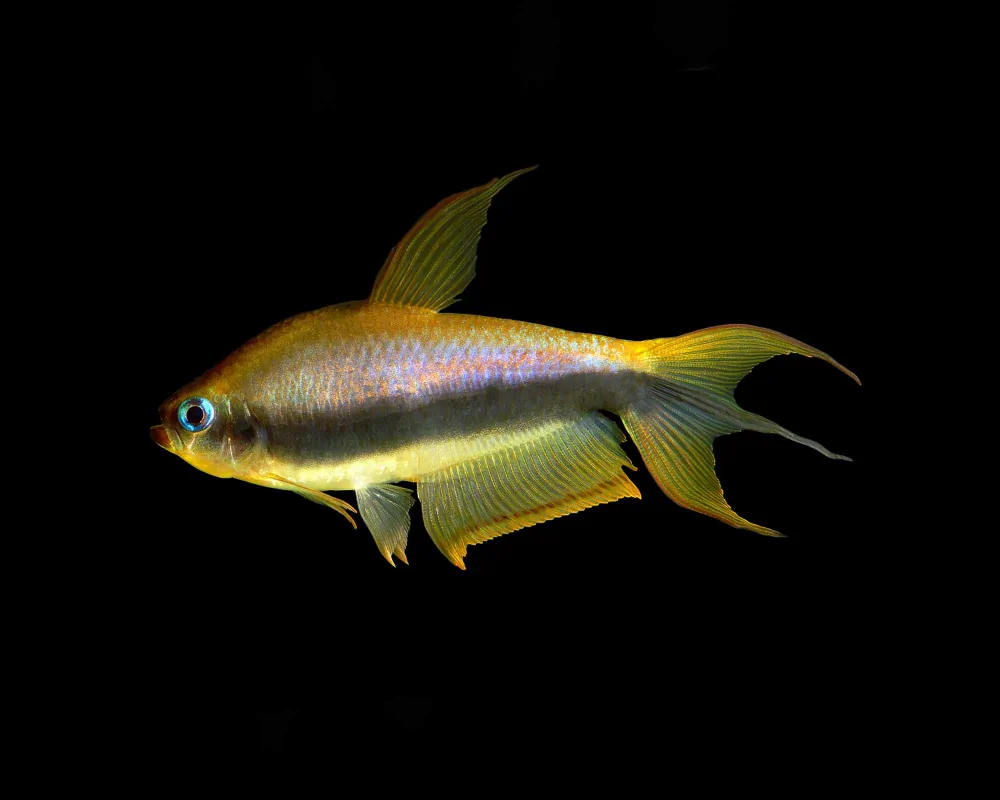
    The Golden Emperor Tetra is a stunning, captive-bred color morph of the classic Emperor Tetra. Known for its radiant golden hues, striking blue eyes, and graceful finnage, this peaceful schooling fish adds a touch of elegance to any planted aquarium. It is hardy, active, and perfect for community setups.
  • Hemigrammus rodwayi (Gold Tetra)

    Easy
    Gar
    The Gold Tetra (Hemigrammus rodwayi) is a striking, peaceful freshwater fish native to the rivers of South America. Known for its unique, metallic golden sheen—caused by a harmless skin parasite in the wild—it is a popular, active schooling fish that adds brilliant color to community aquariums.
  • Boraras merah (Gold Spotted Dwarf Danio)

    Moderate
    Gar
    Hailing from the peat swamps of southern Borneo, the Gold Spotted Dwarf Danio (Boraras merah) is a captivating micro-fish. Loved for its fiery red coloration and peaceful nature, it is a highly popular choice for nano aquariums, bringing vibrant energy and schooling behavior to densely planted blackwater setups.
  • Haludaria fasciata (Glowing Coal Barb)

    Easy - Moderate
    Gar
    The Glowing Coal Barb, also known as the Melon Barb, is a stunning, highly active cyprinid native to the rivers of southern India. Renowned for its fiery pinkish-red hues and striking black vertical bands, this schooling fish brings a burst of energy and vibrant color to any peaceful community aquarium.
  • Danio choprae (Glowlight Danio)

    Easy
    Gar
    The Glowlight Danio (Danio choprae) is a stunning, highly active freshwater fish native to the Irrawaddy River drainage in Myanmar. Known for its brilliant neon-orange stripe and striking vertical barring, this peaceful schooling fish adds vibrant color and energetic movement to any appropriately sized, well-planted aquarium.
  • Brevibora dorsiocellata (Emerald Eye Rasbora)

    Easy
    Gar
    The Emerald Eye Rasbora, or Glow-eyed Rasbora, is a captivating micro-fish native to Southeast Asia. Known for its mesmerizing, iridescent green eyes and peaceful schooling nature, it is a favorite among aquascapers. This active, hardy species adds a sparkling dynamic to planted nano and community aquariums alike.
  • Metynnis fasciatus (Striped Silver Dollar)

    Moderate
    Gar
    The Striped Silver Dollar (Metynnis fasciatus) is a captivating, rare freshwater fish native to the Amazon basin. Known for its distinct vertical black stripes over a shimmering silver, disc-shaped body, this peaceful schooling fish is highly sought after by aquarists looking to add dynamic movement to large community aquariums.
  • Metynnis maculatus (Spotted Silver Dollar)

    Moderate
    Gar
    The Spotted Silver Dollar (Metynnis maculatus) is a captivating, disc-shaped characin native to South America. Known for its striking silver body adorned with dark spots, this peaceful schooling fish adds dynamic movement to large aquariums. Though considered a rarity in the hobby, its hardy nature makes it highly rewarding.
  • Osteoglossum bicirrhosum (Silver Arowana)

    Difficult
    Gar
    The Silver Arowana, occasionally referred to as the Gabelbart, is a majestic and ancient fish native to the Amazon Basin. Renowned for its metallic scales and unique surface-hunting behavior, it is highly prized among experienced aquarists who can accommodate its massive size and specialized care requirements.
  • Mormyrus kannume (Freshwater Dolphin / Tapir Trunkfish)

    Moderate - Difficult
    Gar
    The Mormyrus kannume, commonly known as the Freshwater Dolphin or Tapir Trunkfish, is a fascinating oddball from the river basins of Africa. Renowned for its unique trunk-like snout and highly intelligent, inquisitive nature, this nocturnal species uses weak electrical impulses to navigate, making it a captivating choice for expert aquarists.
  • Pseudomugil furcatus (Forktail Blue-eye)

    Moderate
    Gar
    The Forktail Blue-eye (Pseudomugil furcatus) is a captivating, highly active nano fish native to the rainforest streams of Papua New Guinea. Renowned for their striking neon blue eyes, bright yellow finnage, and peaceful schooling behavior, they have become incredibly popular additions to planted community aquariums among dedicated aquarists.
  • Hemigrammus caudovittatus (Flamingo Tetra)

    Easy
    Gar
    The Flamingo Tetra, scientifically known as Hemigrammus caudovittatus, is a robust and lively freshwater fish native to South America. Known for its energetic schooling behavior and hardy nature, it makes an excellent addition to larger community aquariums, though its fin-nipping tendencies require careful selection of tank mates.
  • Rasbora trilineata (Scissortail Rasbora)

    Easy
    Gar
    Originating from the fast-flowing streams of Southeast Asia, the Scissortail Rasbora is an active, schooling fish renowned for its striking, scissor-like tail movements. Their peaceful nature, hardy constitution, and sleek, torpedo-shaped bodies make them a highly popular and captivating addition to community freshwater aquariums.