Overview
The Golden Redhead Tetra, a stunning color variant of the beloved Hemigrammus bleheri (often known as the Rummy-nose Tetra), is a prized addition to the freshwater aquarium hobby. Known for their tight schooling behavior and striking contrast of colors, these tetras serve as excellent indicator fish, as their bright red facial coloration will quickly fade if water parameters decline.

Distribution and Habitat
In the wild, Hemigrammus bleheri is native to the middle and lower Amazon basin, particularly the Rio Negro and Rio Meta in South America. They thrive in blackwater environments characterized by soft, acidic water stained with tannins from decaying organic matter, such as fallen leaves, branches, and submerged tree roots.
Description of Golden Redhead Tetra
Body shape:
They possess a streamlined, torpedo-shaped body that is built for active swimming and navigating river currents.
Color:
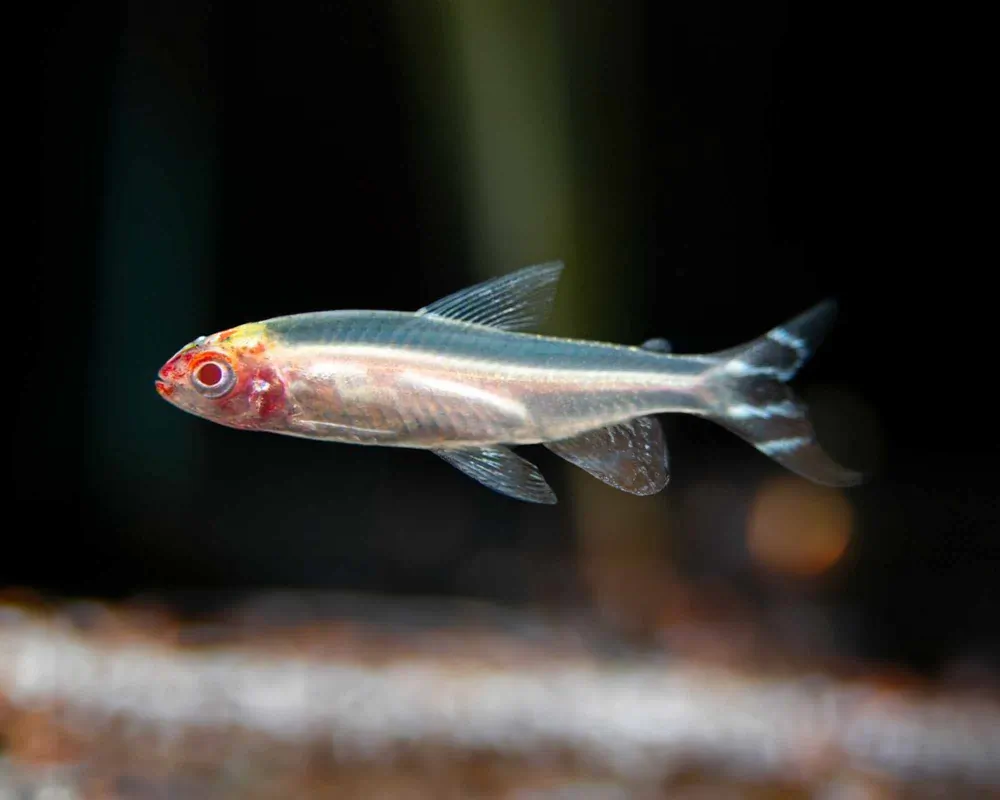
The "golden" variant features a slightly translucent, shimmering gold-to-silver body. The most defining characteristic is the brilliant, deep red coloration covering the entire head and extending slightly past the gills.
Barbels:
This species does not possess barbels.
Snout:
The snout is short and blunt, fully encompassed by the vibrant red mask.
Eyes:
The eyes are relatively large and prominent, often featuring a red hue on the upper iris that blends seamlessly with the head coloration.
Fins:
The dorsal, pectoral, pelvic, and anal fins are mostly transparent and delicate.
The Tail:
The caudal fin (tail) features striking, highly contrasting horizontal stripes of black and white, which act as a visual guide to help the school stay together in murky waters.
Temper
They possess a highly peaceful temperament, making them ideal, unobtrusive residents for community aquariums.
Sociality
This is a strictly schooling species. They are highly social and must be kept in groups of at least 6 to 10 individuals to feel secure, reduce stress, and display their best colors and natural behaviors.
Activity
Golden Redhead Tetras are very active swimmers that will constantly patrol the middle levels of the aquarium in a tight, synchronized group.
Keeping and Caring for Golden Redhead Tetra
Tank size:
A minimum tank size of 20 gallons (75 liters) is recommended to provide ample swimming space for a proper school.
Water Parameters:
Temperature
They prefer warm tropical waters ranging from 24-28°C (75-82°F).
pH
Maintain an acidic to neutral pH between 5.5 and 7.0.
Hardness
Soft water is essential, ideally kept between 2 and 8 dGH.
Ammonia, Nitrite, Nitrate
Ammonia and Nitrite must always be at 0 ppm. Nitrates should be kept as low as possible, ideally below 20 ppm, as they are notoriously sensitive to poor water quality.
Lighting
Dim to moderate lighting is preferred to mimic their shaded, forest-canopy natural habitat.
Water flow
A gentle to moderate water flow is ideal, providing some current without exhausting the fish.
Decorations and Plants
A dark substrate, driftwood, and dried leaf litter (like Indian Almond leaves) will perfectly recreate their blackwater habitat. Dense planting along the background and sides will offer hiding spots while leaving open swimming space in the center.
Diet
They are omnivores and will readily accept high-quality dry flakes, micro-pellets, and live or frozen foods such as daphnia, baby brine shrimp, and bloodworms.
Some Feeding Tips
Feed them small amounts 1 to 2 times a day, only giving what they can consume within a couple of minutes. Ensure the food size is small enough to fit their modest mouths.
Breeding
Breeding is considered difficult as it requires very specific water conditions (extremely soft and acidic water) and a dim, quiet environment. They are egg scatterers that provide no parental care. A separate breeding tank with fine-leaved plants or a spawning mop is necessary, and parents should be removed immediately after spawning to prevent egg predation.
Conclusion
The Golden Redhead Tetra is a mesmerizing and active fish that brings a splash of color and synchronized movement to any soft-water community tank. While they require a bit more attention to water quality than some beginner fish, their striking appearance and peaceful nature make them incredibly rewarding for dedicated aquarists.




Leave your comments