It’s time to help contribute for biggest aquarium gallery online

SUBMIT HEREVIEW GALLERY

Hyphessobrycon wadai (Blackberry Tetra)

Overview

The Blackberry Tetra (Hyphessobrycon wadai) is a relatively new and incredibly popular addition to the aquarium hobby. Formally described in 2016, this species has captivated fishkeepers with its unique dark, berry-like coloration. As a member of the Characidae family, it exhibits the classic tetra charm but stands out as a true centerpiece in appropriately scaped aquariums.

Image of blackberry tetra hyphessobrycon wadai

Distribution and Habitat

Endemic to South America, the Blackberry Tetra is primarily found in the Rio Tapajós basin in Brazil. In its natural habitat, it thrives in clearwater tributaries characterized by sandy substrates, submerged tree roots, and scattered leaf litter. These waters are typically slightly acidic and well-oxygenated.

Description of Blackberry Tetra

Body shape:

They possess a classic rhomboid, laterally compressed body typical of many species within the Hyphessobrycon genus, allowing them to navigate effortlessly through dense aquatic vegetation.

Color:

Their most defining feature is their striking deep purple to inky-blue body, which darkens to an almost blackish hue under optimal conditions, perfectly resembling a ripe blackberry.

Barbels:

Like all characins, the Blackberry Tetra does not possess any barbels.

Snout:

The snout is short and somewhat blunt, featuring a small, terminal mouth adapted for picking micro-prey from the water column.

Eyes:

They have relatively large, expressive eyes that often feature a bright, reflective blue or reddish ring around the pupil, contrasting sharply with their dark bodies.

Fins:

The dorsal, anal, and pelvic fins display beautiful translucent reddish to vibrant orange hues, creating a spectacular visual contrast against their dark purple bodies.

The Tail:

The caudal (tail) fin is deeply forked and carries the same reddish-orange coloration seen on the other fins, adding to their dynamic appearance when swimming.

Temper

The Blackberry Tetra is a remarkably peaceful species. They do not bother other tank mates and are generally timid if kept alone, preferring the safety and confidence that comes with numbers.

Sociality

This is a highly social, schooling fish. To observe their best behaviors and most vibrant colors, they should be kept in groups of at least 6 to 8 individuals, though larger schools of 12 or more are highly recommended.

Activity

They are active mid-water swimmers. Throughout the day, they will loosely shoal around the middle levels of the aquarium, occasionally darting into plants for cover or exploring the lower levels for food.

Keeping and Caring for Blackberry Tetra

Tank size:

A minimum tank size of 60 liters (15 gallons) is recommended for a small school, though a 20-gallon long tank is ideal as it provides ample horizontal swimming space.

Water Parameters:

Temperature

Maintain the water temperature between 22-26°C (72-79°F) to mimic their tropical South American habitat.

pH

They prefer slightly acidic to neutral water, with a pH range of 6.0 to 7.2 being optimal.

Hardness

Soft to moderately hard water is best, ideally kept between 2 and 12 dGH.

Ammonia, Nitrite, Nitrate

Water quality must be pristine. Ammonia and Nitrite must always be at 0 ppm, and Nitrate should be kept consistently below 20 ppm through regular water changes.

Lighting

Moderate to dim lighting is preferred. Floating plants can be used to diffuse bright lights, which will help the tetras feel secure and encourage them to display their deepest, darkest colors.

Water flow

A gentle to moderate water flow replicates the sluggish to moderately moving tributaries they originate from.

Decorations and Plants

A heavily planted tank with dark substrate brings out their best colors. Driftwood tangles, dried botanicals (like almond leaves), and dense background plants will make them feel right at home.

Diet

Blackberry Tetras are omnivorous micro-predators. In the aquarium, they will readily accept high-quality crushed flakes, micro-pellets, and freeze-dried foods. To ensure optimal health and coloration, their diet should be supplemented with live or frozen foods such as daphnia, baby brine shrimp, and bloodworms.

Some Feeding Tips

Feed them small amounts once or twice a day—only what they can consume within two minutes. Because they have small mouths, ensure that pellets or granules are appropriately sized.

Breeding

Breeding is similar to other Hyphessobrycon species. They are egg scatterers that exhibit no parental care. To breed them, set up a separate, dimly lit breeding tank with soft, slightly acidic water and fine-leaved plants like Java Moss or spawning mops. Condition the adults with live foods, introduce a healthy pair or small group to the breeding tank, and remove them immediately after spawning to prevent them from eating the eggs. The fry will hatch in 24-36 hours and require infusoria until they are large enough to eat baby brine shrimp.

Conclusion

The Blackberry Tetra is a truly spectacular fish that offers a rare and beautiful color palette to the freshwater hobby. Their peaceful demeanor, relatively straightforward care requirements, and stunning purple-and-red contrast make them an outstanding choice for both intermediate and experienced aquarists looking to create a vibrant, harmonious community aquarium.

Fish info

Care level: Easy - Moderate
Temperament: Peaceful
Adult size: 4-5 cm
Life expectancy: 3-5 years
Fish type: Tetra
Temperature : 22-26°C
pH: 6.0-7.2
Color Form: Black, Blue, Purple, Red
Leave your comments
Lastest on Fishs
  • Megalomphodus roseus (Golden Phantom Tetra)

    Easy
    Tetra
    The Golden Phantom Tetra (Megalomphodus roseus), native to the shaded forest streams of South America, is a captivating and peaceful schooling fish. Known for its distinct black shoulder spot and subtle golden-yellow hues, this active tetra adds a lively, shimmering dynamic to any planted community aquarium.
  • Gymnocorymbus ternetzi (Golden Mourning Tetra)

    Easy
    Tetra
    The Golden Mourning Tetra, a captivating color morph of the popular Black Skirt Tetra, originates from South America. Known for its shimmering, translucent golden hue and hardy nature, this peaceful schooling fish is incredibly popular among both beginner and experienced aquarists seeking an active and resilient community tank addition.
  • Epalzeorhynchos frenatum (Albino Rainbow Shark)

    Moderate
    Tetra
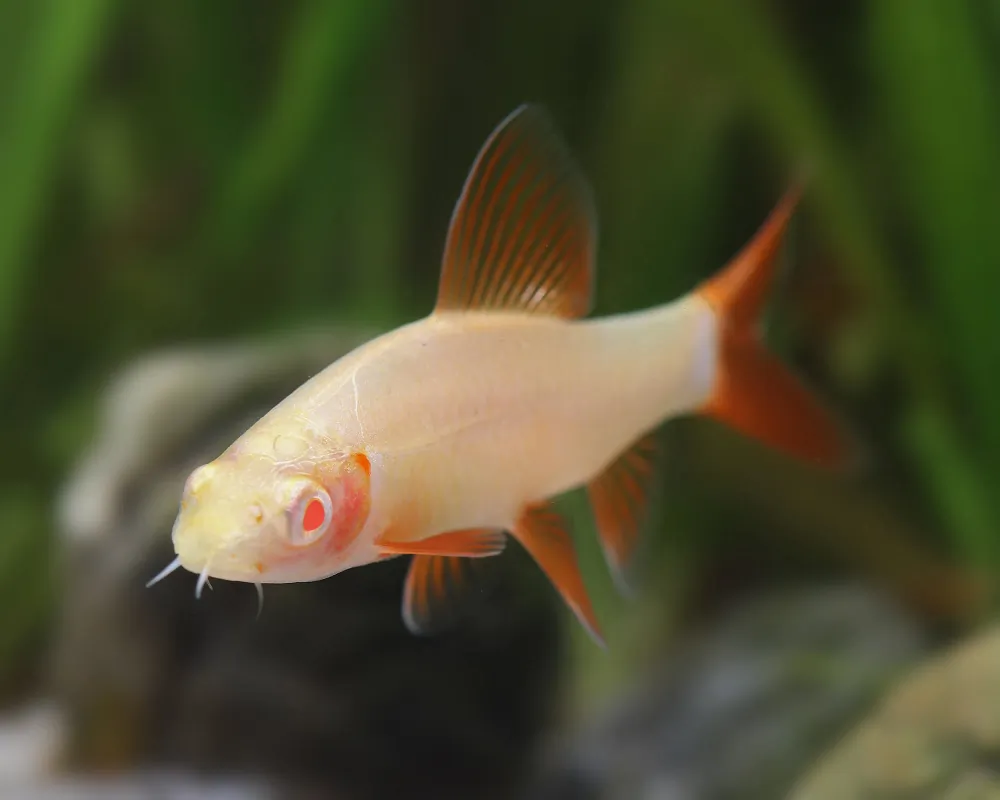
    The Albino Rainbow Shark is a striking freshwater fish renowned for its pale, creamy body and vivid orange-red fins. Originating from Southeast Asia, this semi-aggressive bottom-dweller brings dynamic energy to a well-sized community aquarium. Its shark-like appearance and active scavenging behavior make it a long-standing favorite among aquarists.
  • Nematobrycon palmeri (Golden Emperor Tetra)

    Easy
    Tetra
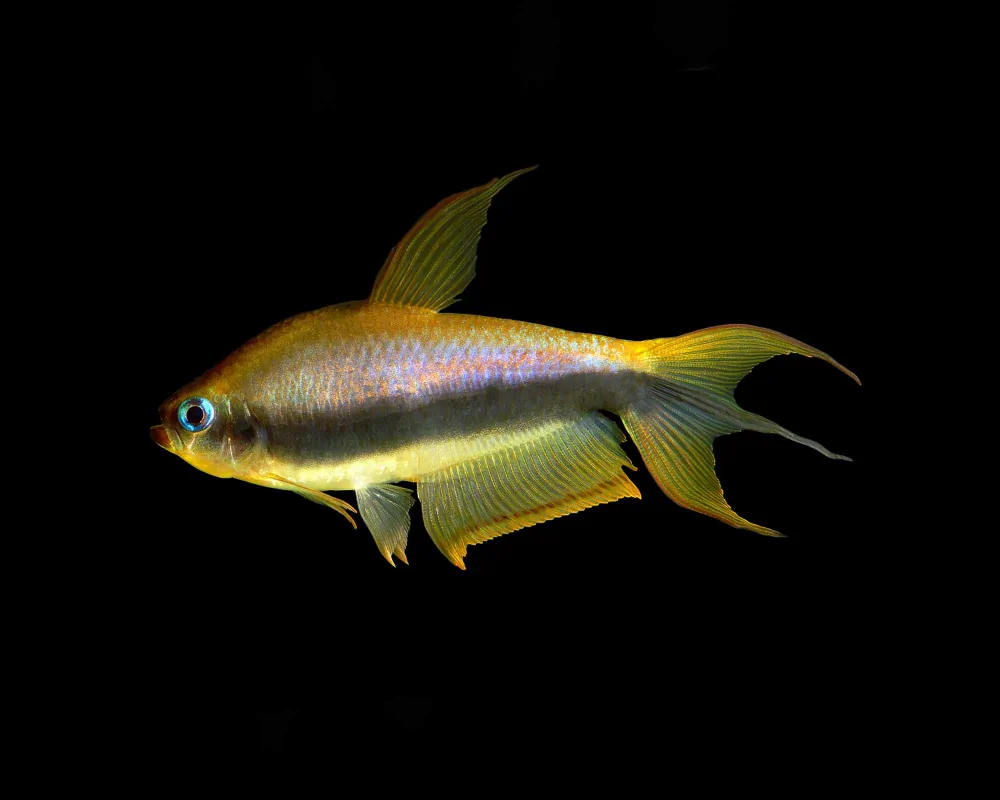
    The Golden Emperor Tetra is a stunning, captive-bred color morph of the classic Emperor Tetra. Known for its radiant golden hues, striking blue eyes, and graceful finnage, this peaceful schooling fish adds a touch of elegance to any planted aquarium. It is hardy, active, and perfect for community setups.
  • Hemigrammus rodwayi (Gold Tetra)

    Easy
    Tetra
    The Gold Tetra (Hemigrammus rodwayi) is a striking, peaceful freshwater fish native to the rivers of South America. Known for its unique, metallic golden sheen—caused by a harmless skin parasite in the wild—it is a popular, active schooling fish that adds brilliant color to community aquariums.
  • Boraras merah (Gold Spotted Dwarf Danio)

    Moderate
    Tetra
    Hailing from the peat swamps of southern Borneo, the Gold Spotted Dwarf Danio (Boraras merah) is a captivating micro-fish. Loved for its fiery red coloration and peaceful nature, it is a highly popular choice for nano aquariums, bringing vibrant energy and schooling behavior to densely planted blackwater setups.
  • Haludaria fasciata (Glowing Coal Barb)

    Easy - Moderate
    Tetra
    The Glowing Coal Barb, also known as the Melon Barb, is a stunning, highly active cyprinid native to the rivers of southern India. Renowned for its fiery pinkish-red hues and striking black vertical bands, this schooling fish brings a burst of energy and vibrant color to any peaceful community aquarium.
  • Danio choprae (Glowlight Danio)

    Easy
    Tetra
    The Glowlight Danio (Danio choprae) is a stunning, highly active freshwater fish native to the Irrawaddy River drainage in Myanmar. Known for its brilliant neon-orange stripe and striking vertical barring, this peaceful schooling fish adds vibrant color and energetic movement to any appropriately sized, well-planted aquarium.
  • Brevibora dorsiocellata (Emerald Eye Rasbora)

    Easy
    Tetra
    The Emerald Eye Rasbora, or Glow-eyed Rasbora, is a captivating micro-fish native to Southeast Asia. Known for its mesmerizing, iridescent green eyes and peaceful schooling nature, it is a favorite among aquascapers. This active, hardy species adds a sparkling dynamic to planted nano and community aquariums alike.
  • Metynnis fasciatus (Striped Silver Dollar)

    Moderate
    Tetra
    The Striped Silver Dollar (Metynnis fasciatus) is a captivating, rare freshwater fish native to the Amazon basin. Known for its distinct vertical black stripes over a shimmering silver, disc-shaped body, this peaceful schooling fish is highly sought after by aquarists looking to add dynamic movement to large community aquariums.
  • Metynnis maculatus (Spotted Silver Dollar)

    Moderate
    Tetra
    The Spotted Silver Dollar (Metynnis maculatus) is a captivating, disc-shaped characin native to South America. Known for its striking silver body adorned with dark spots, this peaceful schooling fish adds dynamic movement to large aquariums. Though considered a rarity in the hobby, its hardy nature makes it highly rewarding.
  • Osteoglossum bicirrhosum (Silver Arowana)

    Difficult
    Tetra
    The Silver Arowana, occasionally referred to as the Gabelbart, is a majestic and ancient fish native to the Amazon Basin. Renowned for its metallic scales and unique surface-hunting behavior, it is highly prized among experienced aquarists who can accommodate its massive size and specialized care requirements.
  • Mormyrus kannume (Freshwater Dolphin / Tapir Trunkfish)

    Moderate - Difficult
    Tetra
    The Mormyrus kannume, commonly known as the Freshwater Dolphin or Tapir Trunkfish, is a fascinating oddball from the river basins of Africa. Renowned for its unique trunk-like snout and highly intelligent, inquisitive nature, this nocturnal species uses weak electrical impulses to navigate, making it a captivating choice for expert aquarists.
  • Pseudomugil furcatus (Forktail Blue-eye)

    Moderate
    Tetra
    The Forktail Blue-eye (Pseudomugil furcatus) is a captivating, highly active nano fish native to the rainforest streams of Papua New Guinea. Renowned for their striking neon blue eyes, bright yellow finnage, and peaceful schooling behavior, they have become incredibly popular additions to planted community aquariums among dedicated aquarists.
  • Hemigrammus caudovittatus (Flamingo Tetra)

    Easy
    Tetra
    The Flamingo Tetra, scientifically known as Hemigrammus caudovittatus, is a robust and lively freshwater fish native to South America. Known for its energetic schooling behavior and hardy nature, it makes an excellent addition to larger community aquariums, though its fin-nipping tendencies require careful selection of tank mates.
  • Rasbora trilineata (Scissortail Rasbora)

    Easy
    Tetra
    Originating from the fast-flowing streams of Southeast Asia, the Scissortail Rasbora is an active, schooling fish renowned for its striking, scissor-like tail movements. Their peaceful nature, hardy constitution, and sleek, torpedo-shaped bodies make them a highly popular and captivating addition to community freshwater aquariums.