
Overview
Knifefish are perennial favorites for exotic home aquariums. This Glass Knifefish is no different, with its unique body shape, transparent color form, and peaceful demeanor. Like many other bony fish, however, the Knifefish can grow to an impressive 16" in the home aquarium. Therefore, they are best kept in systems of 100 gallons or larger.

Like other members of the Gymnotiformes order, Glass Knifefish have a well-developed weak electrical organ that helps these nocturnal fish maneuver the dark waters of their South American homeland. Members of the scientific community have even used Glass Knifefish to study human neurology.
In the home aquarium, however, observation of this non-aggressive fish is equally rewarding. Also known as Green Knifefish, due to their slight green hue, these fish thrive in large, well-planted aquariums decorated with a variety of hiding places within rockwork and plants. They also prefer dim lights, so use more subdued lighting or offer cover with floating aquarium plants. Since these fish are very social amongst their own species, it is best to keep more than one together in the aquarium.
Breeding fish lay their eggs in plants. However, if you want the fry to be raised successfully, either they or the parents need to be removed to a separate aquarium. Breeding in the home aquarium can be difficult because one needs to stimulate the rainy season to encourage spawning.

Feed these omnivores a varied diet of live and frozen foods, including pellets, flakes, tubifex, shrimp, and mosquito larvae.
This species is not particularly demanding in terms of care requirements and can be recommended even for beginners. However, it is important to note that the Ghost Glass Catfish’s shy nature and calm behavior may not be suitable for every aquarist.
Whether you are a beginner or an experienced aquarist, in this article, you will find comprehensive information about Kryptopterus vitreolus that will provide you with the necessary knowledge to successfully keep and care for this intriguing fish species.
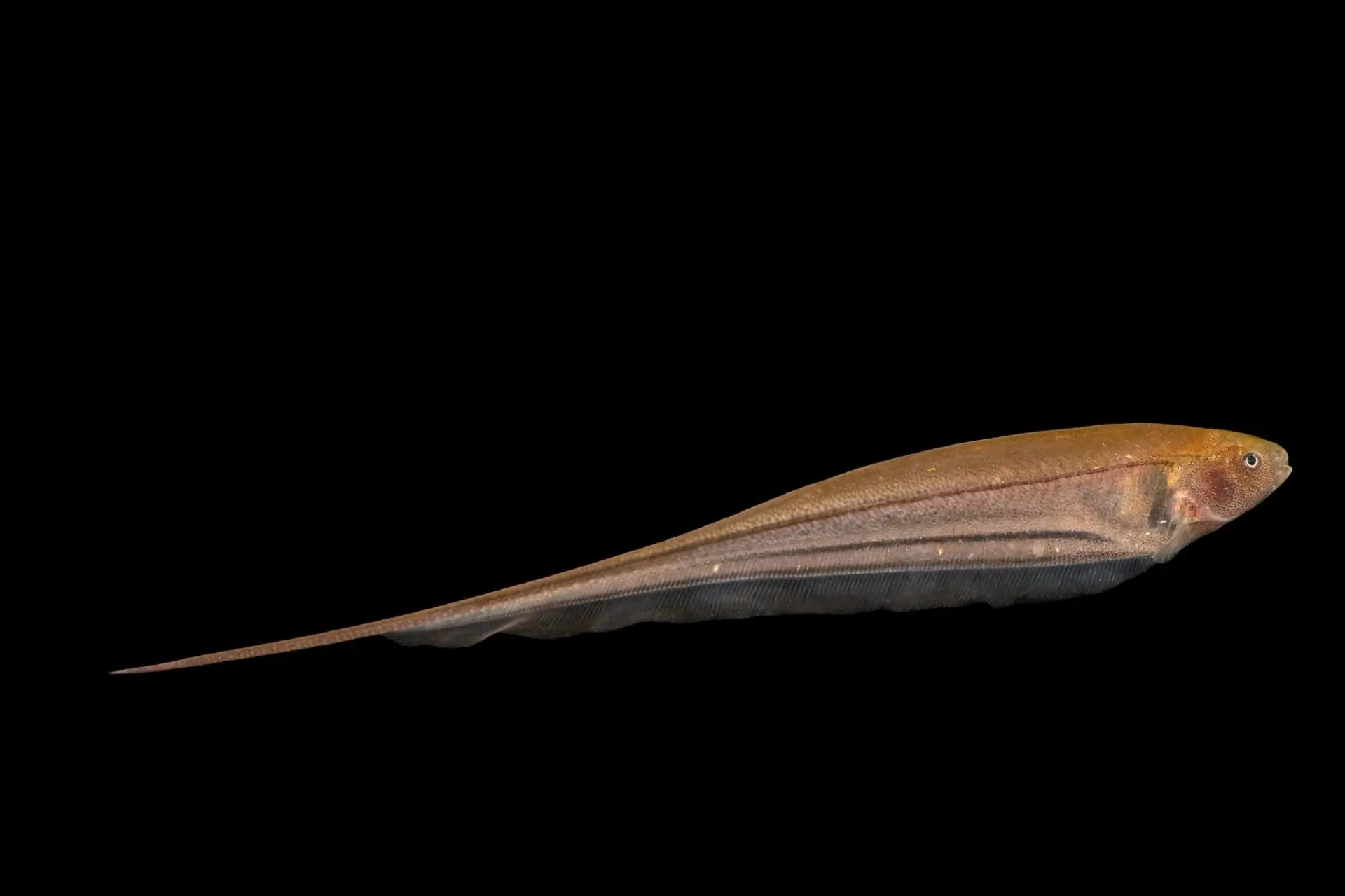
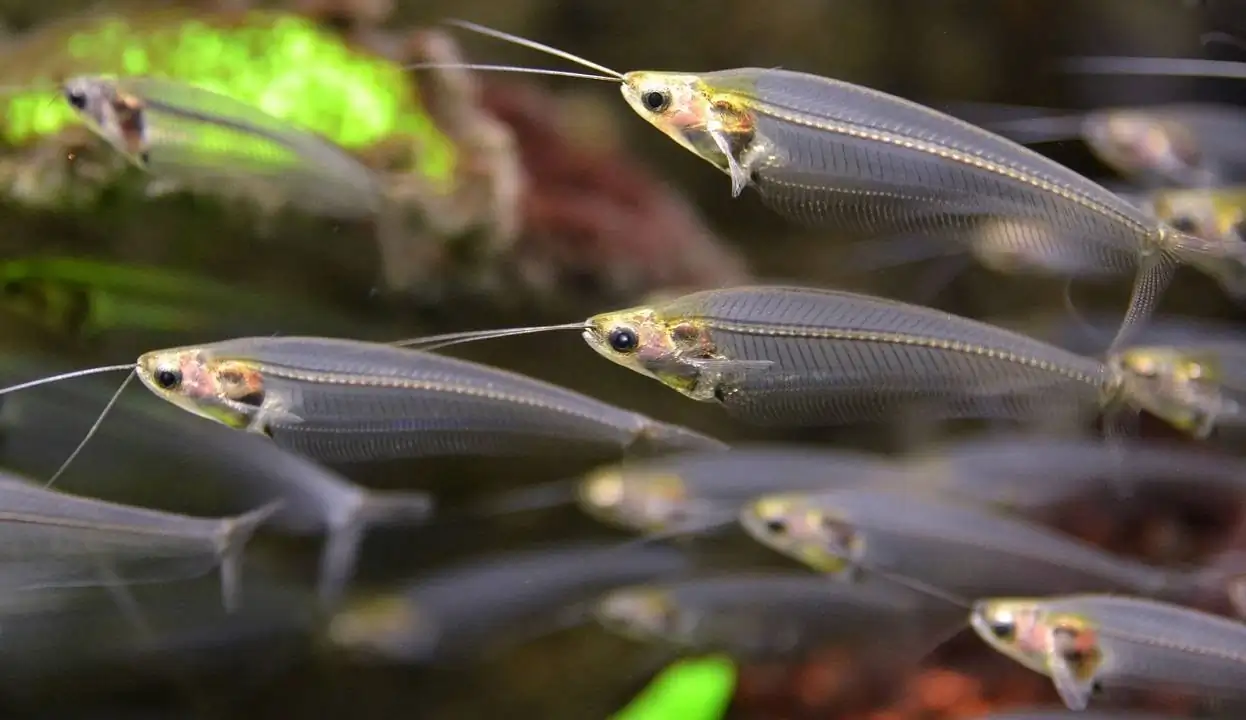
Interesting fact: The natural transparency of Kryptopterus vitreolus made it popular as an experimental subject in science. These fish are often used as in vivo models for studies involving circulation, muscle function, pigment migration, neural regeneration, transplantation, visual processing, and even DNA immunization.
Distribution and Habitat
Eigenmannia virescens has a rather large distribution throughout South-America. It can be found East of the Andes. Here it can be found in waters throughout the northern part of the continent.

Its large distribution has the consequence that it can be found in different biotopes. They occur in both, black and white water. Despite this, the fish mainly inhibits still-deep waters on a substrate of plant debris. Here they like to stay near the soil, which often consists of plant parts.
In nature, The Ghost Glass Catfish can be found in a variety of habitats, including stagnant, slow, and fast-moving rivers, as well as murky or turbid waters filled with all types
Description of Ghost Glass Catfish
This is a relatively small fish species. In aquariums, the average size of adult Ghost Glass Catfish is about 2 – 3 inches (6 – 8 cm) in total length.

- Body shape. It has a laterally compressed, elongated, slender body, and slightly curved tail.
- Color. This species is scaleless. It has a transparent body except for the head. Almost all internal organs are located in the head. Dorsal surfaces of the head and body often contain a yellowish tint. The spinal cord is visible as a distinct dark longitudinal line.
- Barbels. Maxillary barbels on its upper jaw reach beyond the base of the first anal-fin. They act as antennae and help it locate food.
- Barbels. There are two long barbels on its upper jaw (reaching to the 5th anal fin ray) and short mandibular barbels (about ¼ of eye diameter). Mandibular barbels are very short, approximately one-quarter of eye diameter.
- Snout. Snout length is about 29-35% of the head length.
- Eyes. The fish has relatively large eyes that contribute to its sensitive nature. The eye diameter is about 28-34% of the head length. They are located in the middle of the head, eyes are also visible dorsally and ventrally.
- Fins. Fins are transparent as well. Ghost Glass Catfish does not have a dorsal fin, but a single spine-like ray can be observed as a vestige of the dorsal fin. In contrast, the anal fin (48-55 anal fin rays) is elongated and extends from the pectoral fins to
- the tail. The caudal fin is strongly forked.
Temper:
The Ghost Glass Catfish are generally known to be peaceful fish. They have a calm temperament and are not known to be aggressive or prone to nipping at other fish.

Sociality:
Ghost Glass Catfish (Kryptopterus vitreolus) – Detailed Guide Care, Diet, and Breeding in plantsIn their natural habitat, this species is usually found in groups that can number 100 or more, all facing the current in the same direction. They do not stray far from the group.

So, having a group of Ghost Glass Catfish in the aquarium can be beneficial for their well-being. It is generally recommended to keep them in groups of at least 6 or more individuals.
Keeping them in a group allows them to behave more naturally and reduces stress levels. They will feel more vulnerable and behave less actively and socially when kept in smaller groups or alone.
Activity:
Generally, Ghost Glass Catfish are very calm and not active fish. They will not dart around the tank instead they usually gather together in a tight-knit group around their favorite spot in the tank, minding their own business and not disrupting the movement of other fish.

They also do not exhibit typical catfish behaviors – they don’t dig or uproot what they can.
Ghost Glass Catfish are more active in the dark. However, in the daytime, they are very shy and skittish, especially, in the beginning. Once they are scared, they scatter and then return to schooling. They often hide in the plants or stay behind the driftwood and rarely come out unless it is a feeding time.
Note: Stressed fish may lose its transparent camouflage and become opaque.
At the same time, once accustomed to the aquarium conditions, when kept in a suitable group, their calm behavior can quickly change to highly active during feeding time.

Interesting facts: According to the study, the fish shows flickering iridescence throughout the transparent body. When light passes through the tightly packed layers of muscle fibers, it creates a diffraction effect that produces a shimmering appearance. Ghost Glass Catfish are very good at sensing magnetic fields. It was shown that they have a specific ampullary organ for that.
Keeping and Caring for Ghost Glass Catfish
In addition to many plants, the aquarium must also contain sufficient hiding places in the form of wood and stones. The fish will appreciate floating plants as they dampen the light. There should be no to a weak current in the water. Make sure you have a strong filter, as the fish cannot withstand pollution and changing water conditions.

Its carnivorous diet and considerable size make it an unsuitable cohabitant for small fish species. Small fish will be seen as food. They will be peaceful towards other larger fish. The fish have complex social relationships with each other. Conspecific members of Eigenmannia virescens can communicate with each other by means of weak electrical pulses. It is striking that the pulses of females are stronger than males. The fish therefore use the pulses not only for detecting objects, but also for mutual communication. Despite this mutual communication, fights can occur. These often cause no injuries.
To keep Ghost Glass Catfish healthy and happy, we need to understand their requirements and mimic their natural habitat. Stress will significantly reduce their lifespan.
While this species does not demand overly intricate care requirements, there is one thing to remember – these fish do not tolerate ammonia, nitrites, or nitrates really well.
So, it is still recommended to refrain from introducing them as the first occupants immediately after completing the aquarium cycling process. Wait for at least a couple of weeks until the balance is completely established.
Are Ghost Glass Catfish Plants Safe? Yes, Ghost Glass Catfish are completely plant safe. They will not eat any healthy plants in the tank. This specie does not eat living plant material.
Tank size:
The small size and relatively passive behavior of this fish should not mislead you when choosing a tank size for them.
Ghost Glass Catfish require a large tank, and there are a couple of important reasons for that, such as:
it is easier to maintain water balance and parameters in larger aquariums.
it is crucial to provide both hiding places and open areas without vegetation, driftwood, or other decorations for these fish.
Therefore, for a small group of 6-8 fish, you will need at least a 20-gallon (80 liters) tank. One Ghost Glass Catfish for every 2 – 3 gallons.
Important: Ghost Glass Catfish are jumpers! So, it is imperative to take measures, for example: using a tank cover, lowering the water level, and using floating plants, which is essential to ensure their safety.
Water Parameters:
Temperature: Ghost Glass Catfish prefer water temperatures ranging between 72 to 79°F (22°C to 26°C).
pH: The ideal pH range is 6.5 to 8.0.
Hardness: The recommended general hardness (GH) range for these fish is 3 to 15 dGH. The recommended carbonate hardness (KH) range is 2 to 10 dKH.
Ammonia, Nitrite, Nitrate: It is important to maintain the ammonia, nitrite, and nitrate levels at 0 ppm, 0 ppm, and below 40 ppm, respectively.
Monitor the water parameters regularly and do water changes every week.
Lighting:
When the light hits them and they turn iridescent, it makes them look really cool. Unfortunately, Ghost Glass Catfish do not like bright light, it makes them stressed and they start hiding.
These fish enjoy remaining still in areas near the surface with dim lighting.
Water flow:
Ghost Glass Catfish (Kryptopterus vitreolus) – Detailed Guide Care, Diet, and Breeding - groupIt was noticed that swimming against the slow current makes them more active.
Decorations and Plants:
Ghost Glass Catfish are shy and will appreciate plenty of hiding places, such as caves, driftwood, tall plants, and floating plants. They may retreat to these hiding places if they feel threatened or stressed.
Diet
These knifefish are carnivorous. Their diet can consist of Tubifex, earthworms, snails, and small fish. Eventually, the fish can be learned to eat frozen or fabricated foods. Some specimens even end up eating flakes or granules.
When looking for food, the Eigenmannia virescens uses weak electrical signals. These signals are used to actively search for prey. They will actively swim through the tank and not lie in an ambush waiting for a victim to swim by. Once the fish have found their prey, they will swim past it backward. This allows the fish to “scan” their prey and know exactly where it is located. During this process, they position themselves so that their head moves towards their prey. Once the food is near their mouth, they will consume it with a quick movement.
Some Feeding Tips:
Although Ghost Glass Catfish can adapt to feeding during the day, observation of their behavior has shown that these fish become more active during the dark hours. Therefore, an ideal approach would be to feed them at least in the late evening. This is their time.
Use the «five-minute rule». They are not prone to gluttony and quickly satisfy their appetite.
The main drawback of this feeding habit is that any food that falls to the bottom is rarely picked by them. Thus, if there is no cleaning crew (such as snails or shrimp) it can lead to ammonia, nitrite, and nitrate buildup in the tank. So, do not forget to regularly clean the substrate.
Features:
Diet Type: Omnivore
Food Preference: Meat
Feeding Frequency: Daily
Breeding
Breeding these fish can be tricky. To encourage the Eigenmannia virescens to spawn, the rainy season can be simulated in an aquarium with soft acid water (DH between 2 and 4). This can be done by pouring cooler water onto the water with a watering can over the course of several hours. The eggs will then be deposited in the morning. This happens in several successive pairings, each time laying a number of eggs. The eggs will be laid between the roots of floating plants. The entire mating takes 3 to 6 hours. A fish can eventually lay 100 to 200 eggs. The eggs can then be removed from the parents. The young fish can then be fed with Artemia nauplii.
Conclusion
The Ghost Glass Catfish are one of the most unusual members of the catfish family. They have a truly fascinating appearance, making them a mesmerizing sight in an aquarium.
However, if you are fond of colorful and active fish that strive to always be in sight, this particular species may not be suitable for you.
Ghost Glass Catfish are very calm fish that more closely resemble ghosts hiding in a corner than vibrant and boisterous fish.


Leave your comments